
Global
Türkiye
Bangladesh
India
Việt Nam
Indonesia
中国
close

What are PFAS?

Per- and polyfluoroalkyl substances (PFAS) are a group of at least 10,000 substances used to manufacture many consumer products. They repel water, grease and dirt. They remain stable under heat and chemical exposure.

Those properties made them a widely used ingredient across consumer goods manufacturing. In textiles, PFAS are applied to outdoor jackets, workwear and protective clothing to repel water and oil. They also appear as non-stick coatings on cookware such as frying pans and baking tins.

Why are PFAS so dangerous?

PFAS are synthetic compounds that accumulate in environments and bodies. These 'forever chemicals' are persistent and linked to serious health effects (e.g., liver toxicity and carcinogenicity).

Planet

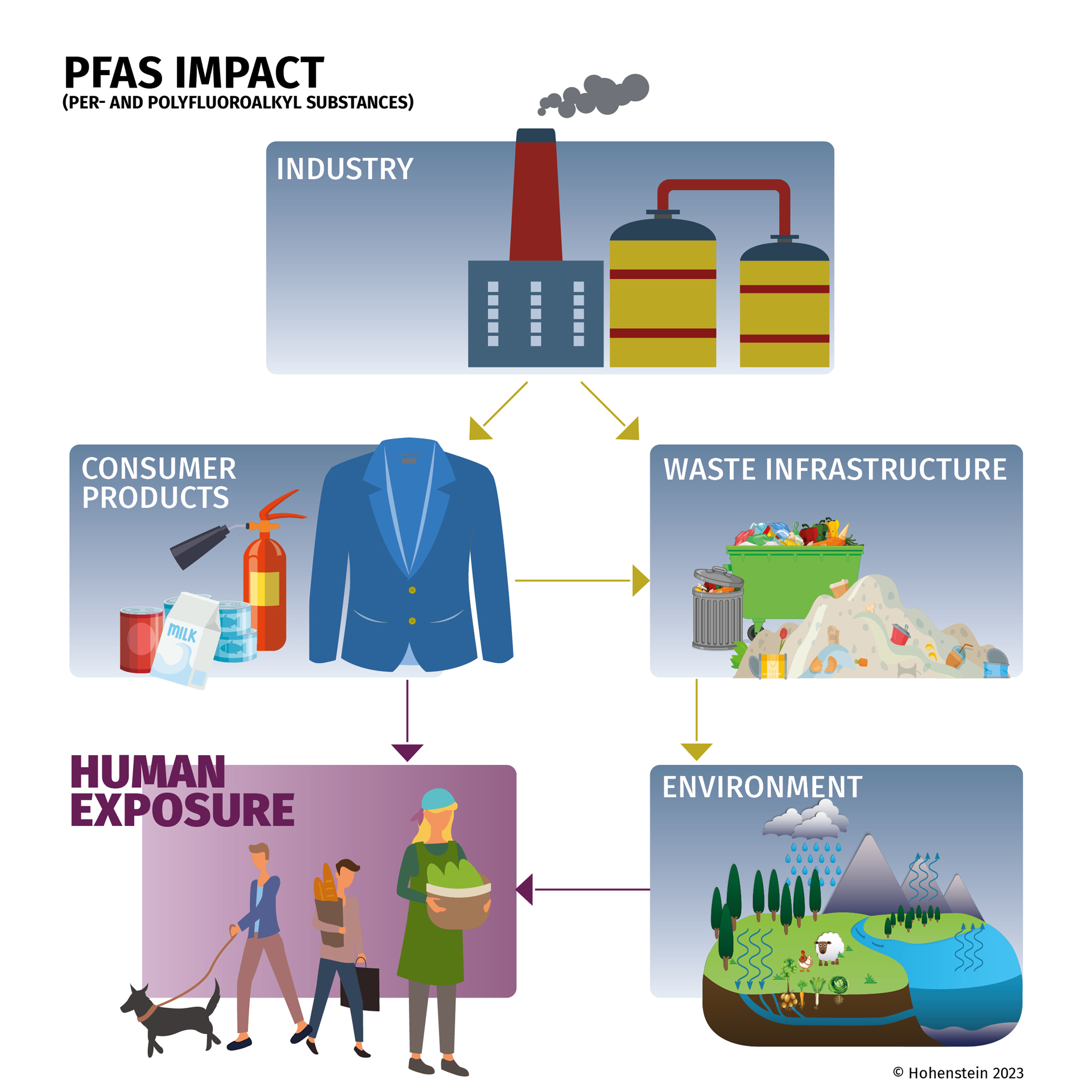
PFAS can affect the environment during production, use, care and disposal of products. These highly stable “forever chemicals” do not degrade in groundwater and soils. Instead, PFAS can accumulate in living organisms and be ingested by humans through the food chain.

People

Studies have shown widespread contamination of the blood and breast milk in the global population. PFAS have been linked to effects on the thyroid, hormonal system, liver damage and cancer, among others.

The PFAS Compliance Problem for Brands, Retailers and Suppliers

PFAS restrictions are tightening across markets with countries and states introducing new limits and phase-outs.

Retailers, brands and suppliers in all industries are facing pressure from regulators, customers and consumers. France's PFAS ban took effect in January 2026 - the strictest to date. 

  • Maintaining product performance as PFAS are phased out and alternatives evaluated
  • Identifying where PFAS enter complex supply chains and tracing contamination to its source
  • Keeping up with rapidly changing state, federal and international regulations, industry initiatives and customer RSL requirements
  • Industry initiatives and innovations
  • Clearly communicating compliance and performance to suppliers, retail customers and consumers
  • Balancing testing scope and cost against regulatory and brand risk

PFAS Regulations

The PFAS substance group has become the focus of NGOs and legislators.
Types of PFAS Regulations

In general, there are 4 types of PFAS regulations/requirements being enacted or proposed:

  • BAN on intentionally added PFAS (e.g., California, Colorado, Connecticut, Maine, Minnesota, New Jersey, New York, Rhode Island, Vermont, Washington, U.S. TSCA, EU, UK, France)
  • REPORTING/notification (e.g., California, Maine, Minnesota, New Jersey, Vermont, Washington, U.S. TSCA, U.S. EPA)
  • LABELING/warning (e.g. California, Indiana)
  • Manufacturer CERTIFICATE of compliance (e.g. California, Minnesota)
U.S. PFAS Laws

How are PFAS regulated in the U.S.?

In the U.S., many bills for state regulations on consumer products have been introduced. On Jan. 1, 2023, the first laws went into effect.

  • In contrast to the targeted restriction of individual substances as defined in the EU, the entire group of organically bound fluorine (total organic fluorine (TOF)) has been regulated in the U.S.
  • Some state laws target specific chemicals, products or categories, while others cover all products
  • Compliance requires different testing approaches
EU PFAS Laws

How are PFAS regulated in Europe?

In Europe, the first compounds of this group, PFOS and PFOA, were restricted several years ago. Further individual compounds have been included with more to follow.

French PFAS Ban
France Law No. 2025-188 bans products with PFAS above set limits from being made, imported, marketed, sold or exported.

What is the French PFAS Ban?

The February 2025 law No. 2025-188 bans per- and polyfluoroalkyl substances (PFAS) in multiple product categories (including textiles and footwear). It specifically targets cosmetics, textiles, footwear, ski waxes and waterproofing agents used in these products.

Timeline:

  • 2026 (January): Ban begins for textiles & footwear, with limited exemptions for civil Personal Protective Equipment (PPE)
  • 2030: Ban expands to cover all non-essential textile products

PFAS Thresholds:

Concentrations exceeding these limits are considered to be intentionally added and subject to the ban.

  • Individual PFAS (excluding polymers): Up to 25 parts per billion (ppb)
  • Sum of all PFAS (excluding polymers): Up to 250 ppb
  • Total PFAS (including polymers): Up to 50 parts per million (ppm)

Enforcement:

  • Products sold in France must test below PFAS limits. The final implementing decrees will specify how to demonstrate compliance (e.g. certificates of analysis)
  • No penalties for products are detailed yet, but facilities discharging PFAS will be taxed €100 per 100 grams per year
Legal Actions - Examples

PFAS in Textiles

  • Apparel, carpets, fabric treatments, rugs, textile furnishings, upholstered furniture and others 
    (California, Colorado, Connecticut, Maine, Maryland, Minnesota, New Hampshire, New Mexico, New York, Rhode Island, Vermont, Washington)
  • Personal Protective Equipment/PPE
    (California, Colorado, Indiana, Maryland, New York, Vermont, Washington)

PFAS in Firefighting Foam

  • Phasing out use
    (U.S. Department of Defense)
  • Banning use and/or creating takeback programs
    (California, Colorado, Connecticut, Hawaii, Illinois, Maine, Maryland, Minnesota, New Hampshire, New Mexico, New York, Vermont, Washington)
  • Banning incineration
    (Illinois, New York)

Legal Actions over PFAS

State Attorneys general and class actions are suing over contamination:
(Alaska, Arizona, Arkansas, Colorado, Delaware, Illinois, Maine, Maryland, Massachusetts, Michigan, Minnesota, New Hampshire, New Jersey, New Mexico, New York, North Carolina, Ohio, Oregon, Pennsylvania, Rhode Island, South Carolina, Tennessee, Vermont, Washington, Washington DC, Wisconsin)

  • Polluting companies
  • PFAS manufacturers
  • Firefighting foam manufacturers
  • U.S. Department of Defense (DOD)
  • PFAS in school uniforms
  • False advertising
  • Claims including “health”
Videos

What to consider next?

  • Substitutes for PFAS performance parameters

  • Inventory management and disposal
    - Product end-of-life phase out

  • Legacy contamination at manufacturing facilities

  • Ongoing supply chain management and product testing

PFAS Compliance Steps

  • Monitor and adapt to changing regulatory landscape with a dedicated, 3rd party consultant
    - Prepare to comply with upcoming notification frameworks
  • Audit products and components - internal DC’s and global suppliers
  • Assess supply chain and chemical inputs
  • Implement restricted chemical lists (RSLs) and PFAS test plan
    - Identify and utilize testing pathways
  • Communicate with consumers and suppliers

Hohenstein's Proactive Approach to PFAS

PFAS Screening

PFAS Testing and Compliance

With no standardized set of analytics, testing depends on the market (e.g., target analysis vs. extractable organic fluorine (EOF) vs. total organic fluorine (TOF)). Choosing the right testing approach and performance analysis must always be in line with the latest scientific knowledge. The wrong approach could cause damage to people, planet, reputations and budgets.

You're not alone. Our experts are dedicated to this issue. In the face of growing regulations and complex analysis, we bring technical expertise and analytical know-how. Our smart testing plans ask the right questions. They assess risks specific to the supply chain and product type. They also consider functionality and performance claims.

PFAS Testing Approach

We recommend this approach to PFAS testing:

  • Total Fluorine (TF)
    • Measures total fluorine content - organic and inorganic - as a screening parameter
    • Flag potential for intentionally used PFAS
    • Identifies potential fluorine sources but cannot confirm PFAS presence
    • Ideally performed early, during material selection and design, before formulations are locked in
  • Target Analysis
    • Quantifies specific, known PFAS with precision
    • Used to verify compliance with legal limits and RSL requirements for named PFAS
    • Supports legal substantiation for statements regarding PFAS concentrations in products
    • Helps traces contamination sources, checks supplier claims and supports corrective action
PFAS Certification

PFAS Certification with OEKO-TEX®

For sourcing or marketing, an independent OEKO-TEX® certification shows safety from PFAS. OEKO-TEX® bans the use of perfluorinated and polyfluorinated alkyl substances (PFAS/PFC) in textiles, leather and footwear for STANDARD 100, LEATHER STANDARD, ORGANIC COTTON and ECO PASSPORT certifications.

Global Chemical Testing Labs

Consistent high standards across all our laboratories.

Beyond Compliance

Contact
Ben Mead
Managing Director
Hohenstein Americas