close

What is OEKO-TEX® STANDARD 100?

(Former: STANDARD 100 by OEKO-TEX®)

STANDARD 100 means textiles you can trust.

OEKO-TEX® STANDARD 100 is a globally standardized, independent testing and certification system for safer textiles.

Products that have been successfully tested for harmful substances are awarded the STANDARD 100 label for clear and efficient customer communication. The certificate provides independent verification and reputation protection for B2B partners.

Testing for harmful substances with STANDARD 100 incorporates important legal regulations, numerous chemicals that pose a risk to health (including some that are not yet legally regulated) and a wide variety of health parameters.

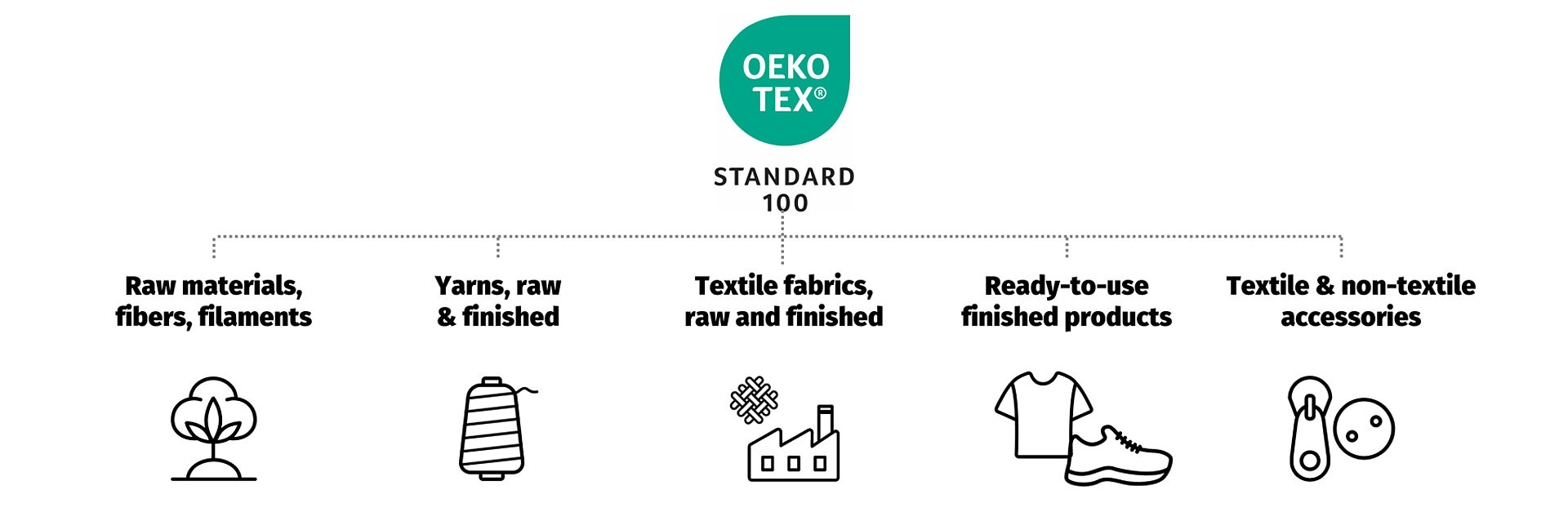
STANDARD 100 certifies textile-related goods.

Raw, semi-finished and finished textile products at all processing levels - and their accessories can be certified.

OEKO-TEX® STANDARD 100 Facts

  • OEKO-TEX® STANDARD 100 certificates are valid for 1 year
  • There are four product classes based on risk
  • For a finished product to be labeled, the final product and each of its components must be tested
  • Annual renewal and testing is required. Renewal applications can be started up to 3 months before expiration
  • On-site audits are required in the first year of certification and every 3rd year thereafter

STANDARD 100 Certification Benefits:

  • A practical tool for quality assurance
  • Consumer protection with textile products that are safe for human ecology and legally compliant - without expending internal resources
  • The OEKO-TEX® criteria catalogue is applied consistently worldwide and provides standardized requirements for purchasing and delivery
  • Many retailers and brands have Restricted Substances Lists (RSLs) based on STANDARD 100 and accept certification in lieu of additional testing
  • As a 3rd party verified label, STANDARD 100 is a recognized marketing tool for transparently promoting product stewardship efforts
  • Built in transparency increases product safety and saves time
  • The modular principle of STANDARD 100 facilitates testing and certification of textile products at every processing stage. Duplicate testing costs are avoided by using certificates from prior stages – even for products with complex structures
  • Marketing opportunities in the OEKO-TEX® Buying Guide and external programs such as Climate Pledge Friendly on Amazon, Foursource, Cradle to Cradle Certified®, U.S. EPA’s Recommendations of Specifications, Standards and Ecolabels

STANDARD 100 Certificate Ownership and Use

A certification is only applicable to a product if each component - and the product itself - is certified.
Ownership

Who can own a STANDARD 100 certificate?

Any manufacturer or reseller of textile materials, finished products or accessories - at any stage of processing - throughout the textile chain.

Many brands and retailers choose to hold their own certificate to simplify labeling, maintain control over supply chain transparency and strengthen traceability.

Use

Using a Supplier's OEKO-TEX® Certificate or Label

Finished Products

  • A supplier’s certificate or label may be used if:
    • The product is sourced directly from the certificate holder
    • The product remains unchanged from the certified version
    • The certificate is valid and covers the product
  • Alternatively, brands and retailers may certify the product under their own OEKO-TEX® label number to maintain control over labeling and traceability

Components and Materials:

  • A supplier’s certificate may be used within the certification process to reduce testing if:
    • The material or component is sourced directly from the certificate holder
    • The certificate is valid and covers the material or component
  • Component certification cannot be used for product labeling or marketing claims -  The finished product must be certified to reference OEKO-TEX® or use the label

Pre-certification

Using Pre-certified Inputs/Components

Traceability, Cost Sharing and the Direct Supplier Rule

Using pre-certified components helps:

  • Identify and address potential issues early in the supply chain, where chemical decisions are made
  • Distribute testing and certification efforts across the supply chain
  • Improve supply chain traceability

Requirements
Pre-certified inputs may be used if:

  • They are sourced directly from the certificate holder
  • The certificate is valid and covers the material or component
  • Traceability
    For certificate renewals, upstream certificates must come from direct suppliers. Certificates from second-tier suppliers are only accepted for first certifications and during the 2026 transition year.
  • Wet Processing:
    For main materials (over 5% of the product's weight or area), all wet processing steps (e.g. dyeing, printing, finishing) must be certified for renewal. Uncertified wet processes are only accepted for first-time certifications and during the 2026 transition year.

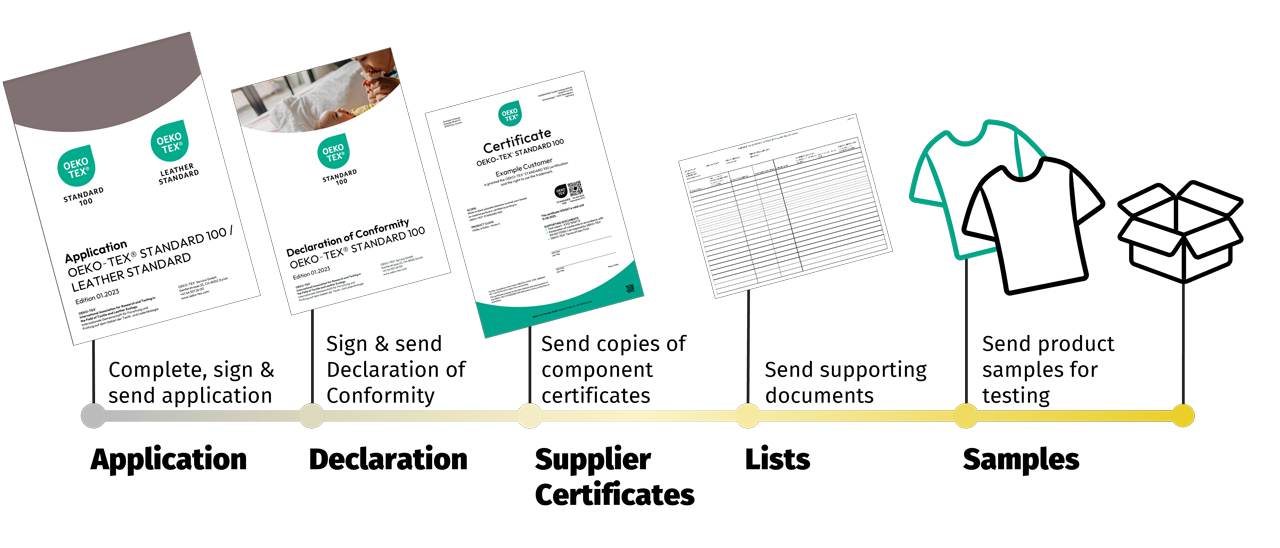
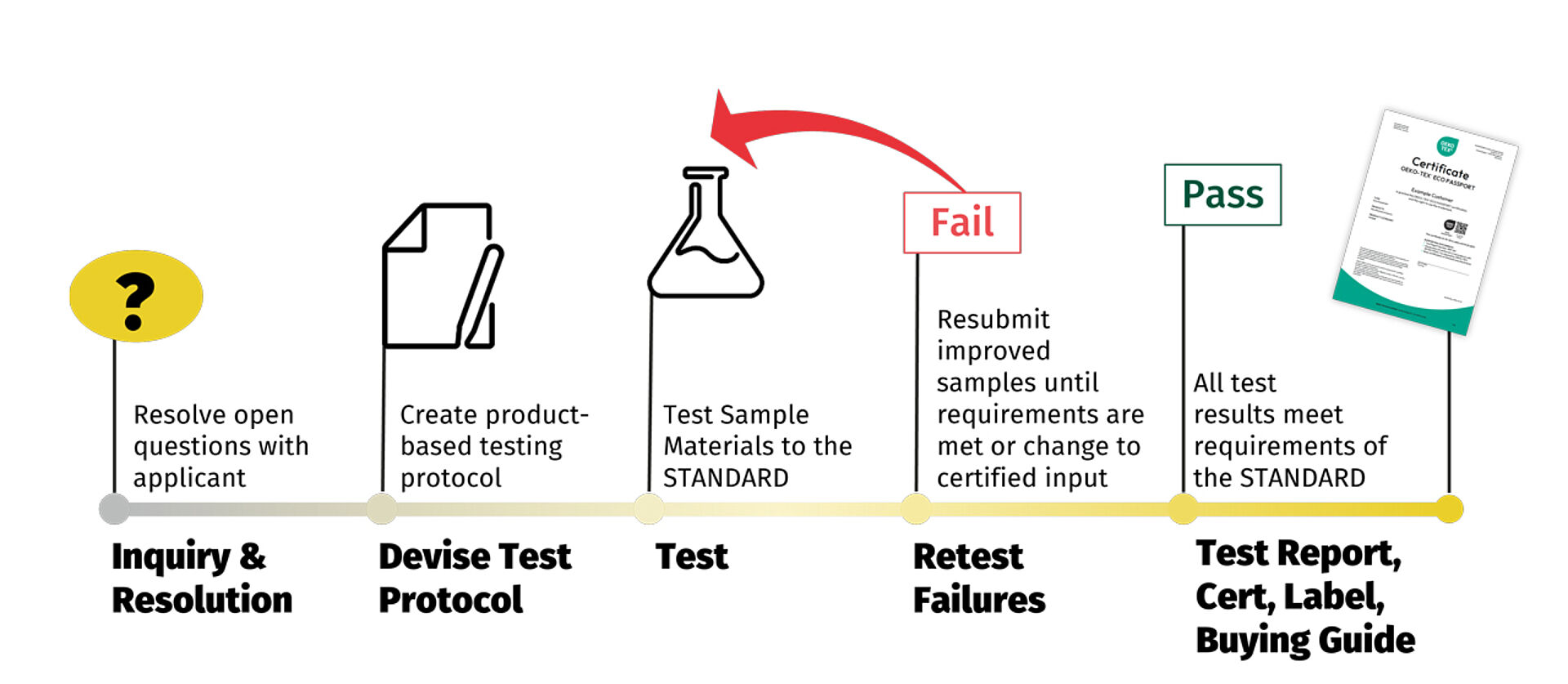
STANDARD 100 Application Process

Application forms, sample instructions and screenshots walk you through the application and certification process.

Application

Certification

Downloads

Standard
Supplements
Factsheets & Brochures
Marketing

Technical Guides & Resources

Contact
Ben Mead
Managing Director
Hohenstein Americas