Türkiye
Bangladesh
Việt Nam
Indonesia
پاکستان
中国
close

Textile Biodegradability Testing

Evaluate how textiles break down—safely and measurably

Biodegradability testing helps you understand how textile materials behave at the end of their life cycle. Hohenstein provides standardized and customized testing to assess how products break down in soil and aquatic environments - and whether residues are safe for the environment.

This data enables you to make credible sustainability claims, reduce environmental risk and meet growing regulatory and market expectations.

Why does biodegradability matter?
Textiles that are not reused or recycled often end up in landfills or the natural environment. Understanding how materials degrade is essential to:

  • Evaluate environmental impact at end of life
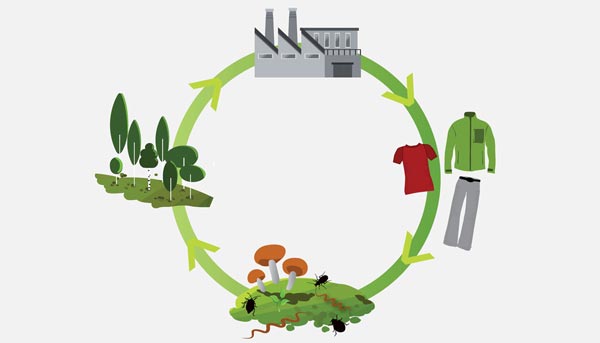
  • Support circular product strategies
  • Reduce risk of harmful residues in soil and water
  • Prepare for evolving regulations, such as Extended Producer Responsibility (EPR)
What We Test

Product and Impact Assessments

We evaluate both material degradation and environmental impact:
  • Degree and rate of biodegradation
  • Behavior of fibers, coatings and finishes
  • Release and impact of residues during degradation
  • Ecotoxicological safety for soil and aquatic environments

Applications include apparel, home textiles, technical textiles and materials used in consumer products.

How We Test

Controlled Conditions for Biodegradation

We design biodegradability tests to deliver reliable, comparable and real-world relevant results.

Simulating real-world conditions
Testing is performed in controlled laboratory environments that reflect natural conditions, such as soil or aquatic systems. This allows us to evaluate how materials behave at end of life, while maintaining the consistency needed for meaningful comparison.

Standardized and reproducible methods
Testing is performed under defined conditions to ensure:

  • Reproducibility
  • Reliable data for product development and claims verification
  • Comparability across materials, products and development stages

Time-based evaluation of material behavior
A time-based approach provides a more complete picture than single-point measurements. This includes monitoring changes in:

  • Material structure
  • Mass loss and integrity
  • Progress of degradation

Assessment beyond degradation
Biodegradability alone is not enough. We also evaluate whether degradation leads to environmentally safe outcomes, including:

  • Analysis of residues after degradation
  • Assessment of potential environmental impact

Reliable and comparable results
The result is clear, science-based data that supports:

  • Product development decisions
  • Material selection
  • Verified sustainability claims
  • Communication with regulators and customers

Applications

Biodegradability tests are used in sourcing, product development, claim verification, quality assurance and circularity initiatives

by textile manufacturers, finishers, brands and retailers
  • Objective measurement of biodegradability in soil
  • Verification of marketing claims
  • Product optimization and sourcing based on data
  • Labeling of biodegradable textile products with a Hohenstein Quality Label (B2C) or Hohenstein certificate (B2B)
  • Determination of product's risk to the environment
  • Quality assurance based on ecotoxicological considerations

Biodegradability Test Methods

Hohenstein combines standardized ISO-based methods with application-specific approaches to evaluate biodegradation and environmental impact.
ISO - Basis Test Methods

Customized Testing Based on Standardized Methods

The Hohenstein test methods were developed based on international standards:

  • ISO 11721-1: Textiles - Determination of resistance of cellulose containing textiles to micro-organisms - Soil burial test - Part 1: Assessment of rot-retardant finishing
  • ISO 846: Plastics - Evaluation of the action of microorganisms on plastics
  • ISO 17556: Plastics - Determination of the ultimate aerobic biodegradability of plastic materials in soil by measuring the oxygen demand in a respirometer or the amount of carbon dioxide evolved
In Soil

Hohenstein Soil Burial Method

Biodegradation in Soil

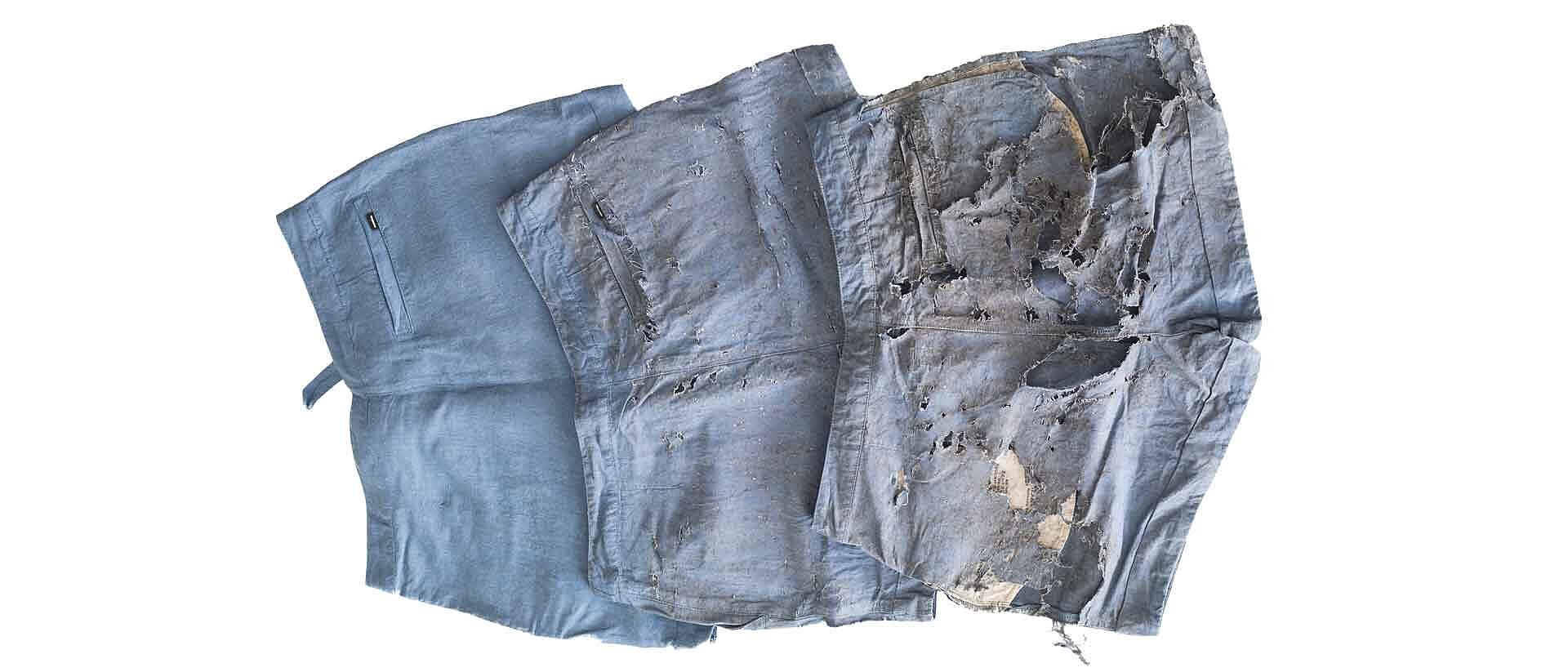
Evaluation of textile materials in natural, aerobic soil conditions using staged excavation and ecotoxicological assessment.

  • Assesses degradation behavior and residue impact
  • Evaluates over a defined test period

Typical timeline:
Minimum 3 months to up to 1 year, depending on material and scope

DIN SPEC 19296 - In Soil

Textiles - Investigation of biodegradability and ecotoxicity in soil under realistic conditions - Test method

DIN SPEC 19296 is a standardized test method for assessing the biodegradability and ecotoxicity of textile fibers and fragments in soil. The method evaluates how textile fragments degrade under defined soil and climatic conditions and whether degradation residues affect plants or soil organisms

Testing includes evaluation at defined time points with staged excavation, combined with ecotoxicological assessment to evaluate both material breakdown and environmental safety.

By combining biodegradability testing with ecotoxicological assessment, DIN SPEC 19296 provides a consistent basis for comparing textile materials and validating environmental claims, such as ‘compostable’.

Read Press Release

Typical timeline:
Usually 6 months

In Sludge

DIN EN ISO 14851 - In Sludge/Wastewater

Determination of the ultimate aerobic biodegradability of plastic materials in an aqueous medium — Method by measuring the oxygen demand in a closed respirometer

DIN EN ISO 14851 uses a closed respirometer method to assess biodegradation in aqueous environments, such as wastewater treatment conditions.

A closed respirometer measures how much oxygen microbes use to break down a material in water, allowing precise calculation of its biodegradability, under controlled conditions.

In DIN EN ISO 14851, the test:

  • Places the sample in a sealed (closed) vessel with microorganisms
  • Monitors oxygen uptake over time
  • Uses this data to determine how much of the material is biologically degraded

Uses a closed respirometer system, where microorganisms degrade the material in a sealed aqueous environment while oxygen consumption is continuously measured.

Oxygen demand reflects microbial degradation
Enables calculation of biodegradation under controlled conditions

Typical timeline:
Usually 2–3 months

Microfiber Biodegradation

DIN SPEC 4872 (DIA) - In Water

Test Method for Textiles - Determination of fibre release during washing and aerobic degradation level in aqueous medium in consideration of ecotoxicity

DIN SPEC 4872 is a standardized test method for determining the environmental impact of textiles during washing. We examine how many fibers are discharged when textiles are washed, how well the fibers break down in wastewater and how harmful the fiber residues are for the environment.

Typical timeline:
2-3 months

Reduce Microfiber Impact

Chemical Biodegradability

OECD 301 F: Testing Biodegradability Testing of Chemicals

Screening of chemicals for ready biodegradability in an aerobic aqueous medium

This test method defines the biodegradability of a chemical. It can be used for soluble and insoluble chemicals, such as detergents, cleaners, industrial chemicals (per REACH regulation), drugs and cosmetics. It categorizes the speed and degree of biodegradation at 22°C (71.6°F) within 28 days and further classifies inherent and persistent biodegradability.

To pass the OECD 301 F manometric respiration test, the chemical must biodegrade by at least 60% within 10 days.

Ecotoxicity

Ecotoxicological Assessment after Biodegradation

To evaluate environmental safety, additional testing is conducted after biodegradation.

Soil environments

  • OECD 207 (earthworm test) - impact on soil organisms
  • OECD 208 (cress test) - impact on plant growth
  • Timing: ~2 weeks following biodegradation testing (typically after 6–12 months, depending on method)

Aquatic environments

  • Method: ISO 20079 (duckweed test)
  • Evaluates the impact of degradation residues on aquatic plant life
  • Timing: ~2 weeks following biodegradation testing (typically after 2-3 months, depending on method)

Supporting analysis
Elemental analysis may be used in respirometer systems to support biodegradation calculations in soil and wastewater-related testing.

Hohenstein Quality Label - Biodegradable

3rd party claim support for biodegradable textiles and products.

Products that meet defined criteria can be awarded the Hohenstein Quality Label for Biodegradability.

This verifies that:

  • Materials biodegrade under defined conditions
  • Residues are ecotoxicologically safe

USE HOHENSTEIN'S REPUTATION

Contact
Ben Mead
Managing Director
Hohenstein Americas